Ramakrishna-Vivekananda Center of New York

ABOUT US
Ramakrishna-Vivekananda Center of New York
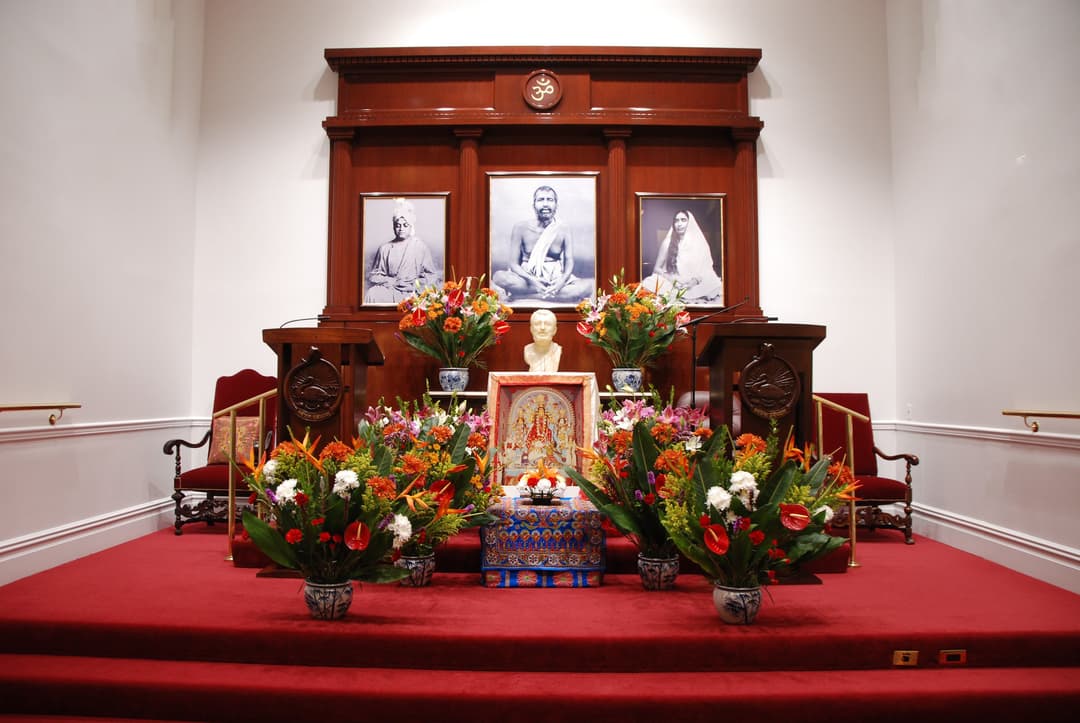
In the archival memory of the Ramakrishna-Vivekananda Center of New York, the 19th-century grainy, sepia-toned photographic style is preserved. The checkered floor, the seated assembly, and the wooden beams are unchanged, grounding the institution's history in a quiet atmosphere of timeless contemplation.
The Center was officially established in 1933 by Swami Nikhilananda. Born Dinesh Chandra Das Gupta in British India, Nikhilananda had been a journalist and a participant in the Indian freedom movement before renouncing his worldly pursuits to join the Ramakrishna Order. Deputed to the United States in 1931 as a representative of the Order, he founded the New York branch to disseminate the philosophical principles of Vedanta. The teachings emphasized the underlying harmony of all religions and the innate spiritual nature of humanity.
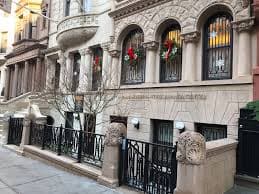
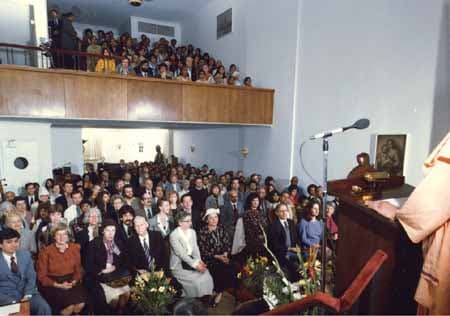
By 1939, the congregation had expanded and required a dedicated space, moving to a permanent facility at 17 East 94th Street within Manhattan’s Carnegie Hill Historic District. The building served as the primary temple and administrative hub. Within this space, the daily and weekly rhythms of the Center were established through lectures, Sanskrit chanting, and silent meditation. The Center functions as a self-sustaining entity, looking to the Ramakrishna Order headquarters in India solely for spiritual inspiration, with its ministers serving as ordained monks of the Order. Even as the chapel underwent structural renovations in 1952—including the addition of a balcony to accommodate increasing attendance—the core aesthetic and disciplined focus of the space remained static.
From this Manhattan headquarters, Swami Nikhilananda produced significant literary works that shaped the Center’s historical legacy. He completed a comprehensive English translation of The Gospel of Sri Ramakrishna directly from the original Bengali, published in 1942. This volume, along with his subsequent translations of the Upanishads and the Bhagavad Gita, provided the foundational texts for the congregation. The Center drew a distinct group of attendees seeking religious instruction. Notable individuals in the seated assembly over the early decades included author J.D. Salinger, comparative mythologist Joseph Campbell, inventor Chester Carlson, and Margaret Woodrow Wilson.
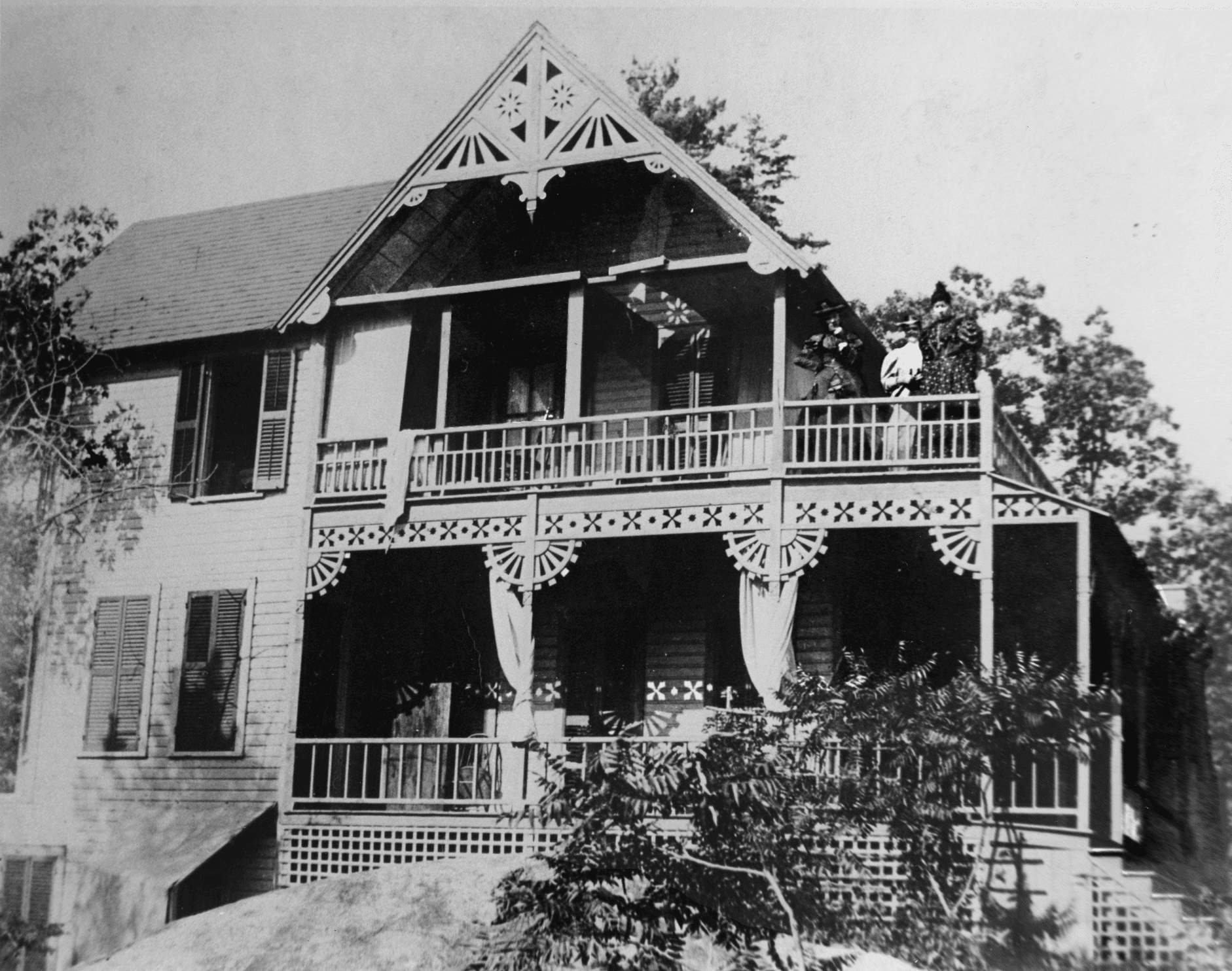
The history of the Center is also closely tied to an upstate New York property. In 1947, the Ramakrishna-Vivekananda Center purchased Vivekananda Cottage in Thousand Island Park on Wellesley Island. This Victorian structure marks the location where Swami Vivekananda spent seven weeks teaching in the summer of 1895. The New York Center maintained the property, including a nearby rock and tree where Vivekananda historically addressed his students, operating it as a dedicated summer spiritual retreat.
Swami Nikhilananda served as the head of the Center until his death in July 1973. Leadership then passed to Swami Adiswarananda, who maintained the strict schedule of discourses and individual guidance. In 1983, the institution observed its fiftieth anniversary, marking a half-century of continuous operation. Today, the Ramakrishna-Vivekananda Center continues its standard functions. The visual and structural hallmarks of its early days endure, framing an environment dedicated strictly to the historical and practical study of Vedanta.

Ramakrishna-Vivekananda Center of New York
Address:
Contact:
Email:
Website: vedanta.org
Copyright © 2024-2026 Ramakrishna-Vivekananda Center of New York, all rights reserved